Most creative directors hate operations. I found my passion for it because I love people.
Every creative team needs structure. People come first, but without a system around them, no leader can scale, no team stays healthy, and no business grows. Project management exists to serve the team and the individual. From brief to capacity. From clarity to pre-production, production, and post. And it must integrate into every other part of the business. If it does not, the system has failed the people inside it.
This is the operation. Live, every day.
The work has to ship. These are some of the numbers.
These numbers exist because the system underneath them does.
Fluent across the systems creative teams actually run on.
I have built operational systems for creative project management across ClickUp, Notion, and Asana. Each platform gets used for what it does best.
ClickUp
Where the agency runs. The system of record for traffic, capacity, briefs, and shoot logistics across every active campaign.
- Full workspace architecture for the agency
- SOP system across video, design, photo, production
- Team capacity dashboards and traffic management
- Brief templates with servant leadership tone built in
- Production timelines mapped to deliverable owners
Notion
Where the thinking lives. The system for strategic docs, brand systems, and long-arc planning.
- Brand systems and design philosophy docs
- Campaign post-mortems and learning loops
- Freelance retainer briefs and creative team development plans
- Long-form strategic planning across multiple brands
Asana
Where cross-functional alignment lives. The system most agencies and clients already run on, so I work fluently inside it.
- Cross-team campaign coordination across stakeholders
- Approval flows for high-stakes client work
- Marketing and creative pipeline alignment
- Asset deliverable tracking across agency and client teams
When the system does not exist yet, I build it.
Off-the-shelf tools cover most of what a creative agency needs. The rest you build yourself. These are the three custom tools my team currently runs on.
CARM
A custom creative project management platform built specifically for creative agencies. Designed around the actual rhythm of creative work, with traffic and capacity at the centre, and brief clarity as the gating mechanism before any work begins.
CARM holds the entire creative operation in one place. Projects, reviews, briefs, creative rooms for live collaboration, screen recording with AI transcription that turns into a brief in one click, an asset library that replaces Dropbox and Drive, custom intake forms, time and capacity tracking, and Bear AI integrated throughout for compliance, brand checks, and brief generation.
- Built-in review and annotation
- Bear AI compliance and brand checks
- Quick Create and Full Briefing workflows
- Creative Rooms for live collaboration
- Record with AI-to-brief conversion
- Linked asset library
- Client Studio for external review
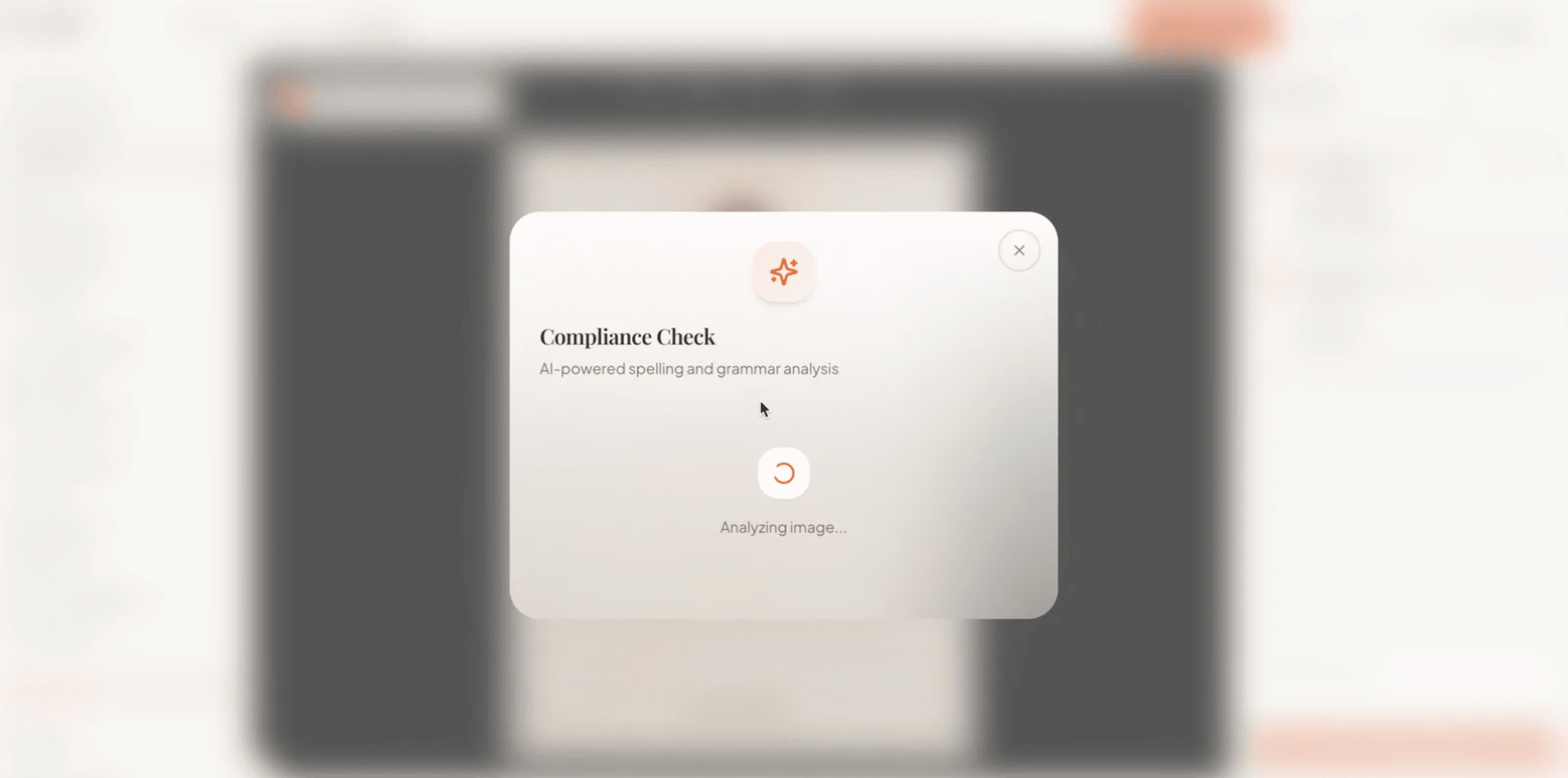
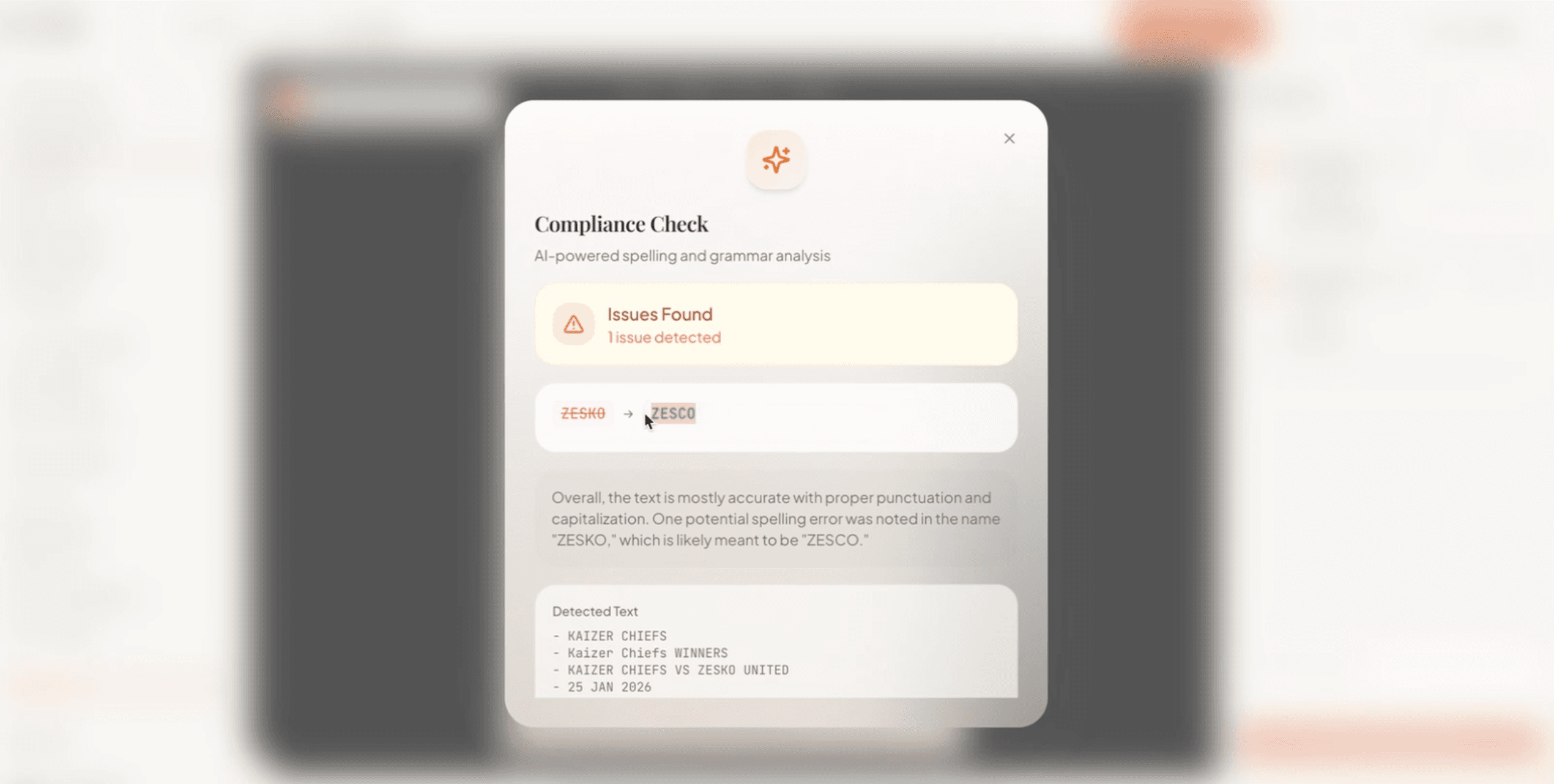
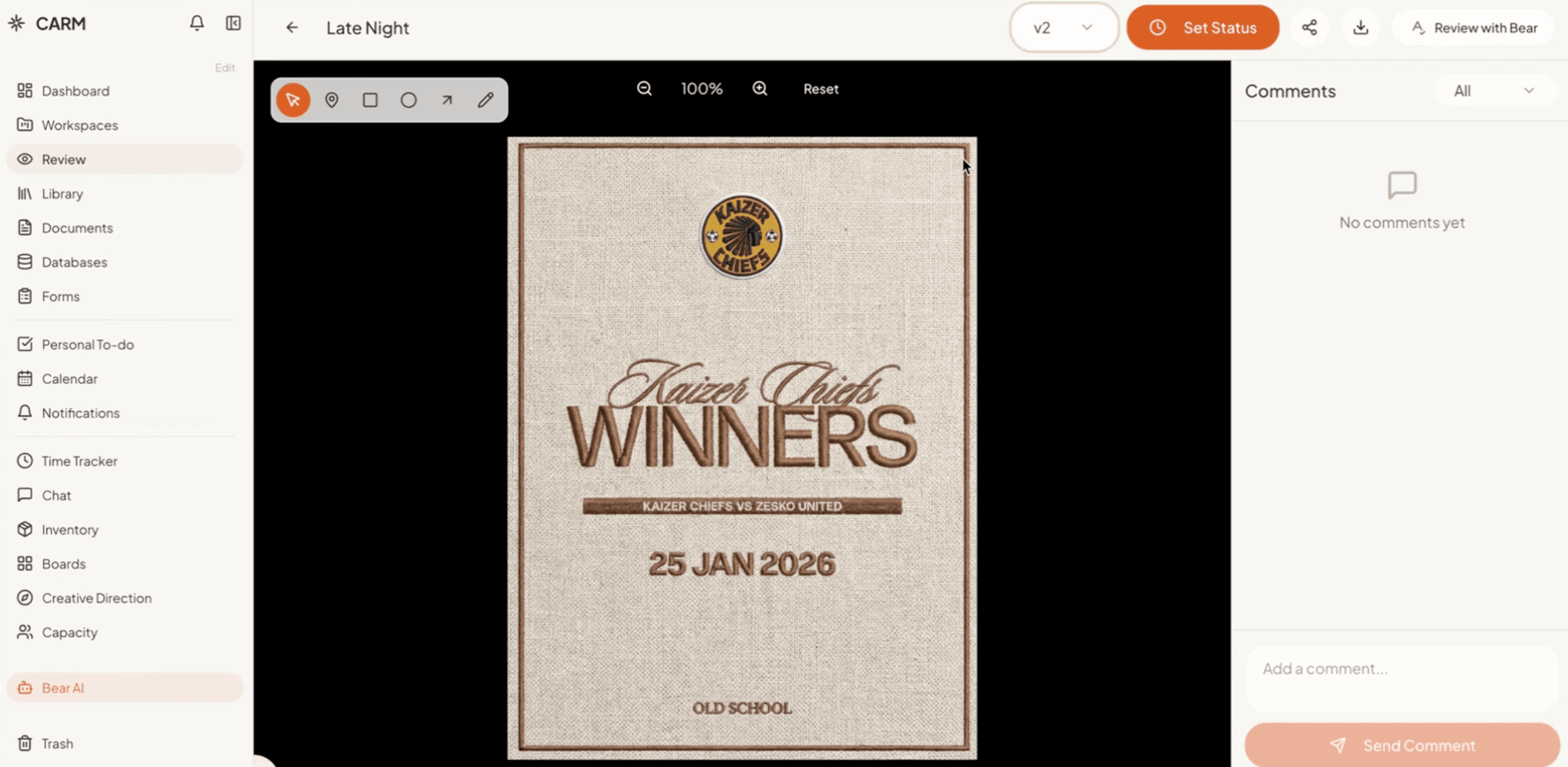
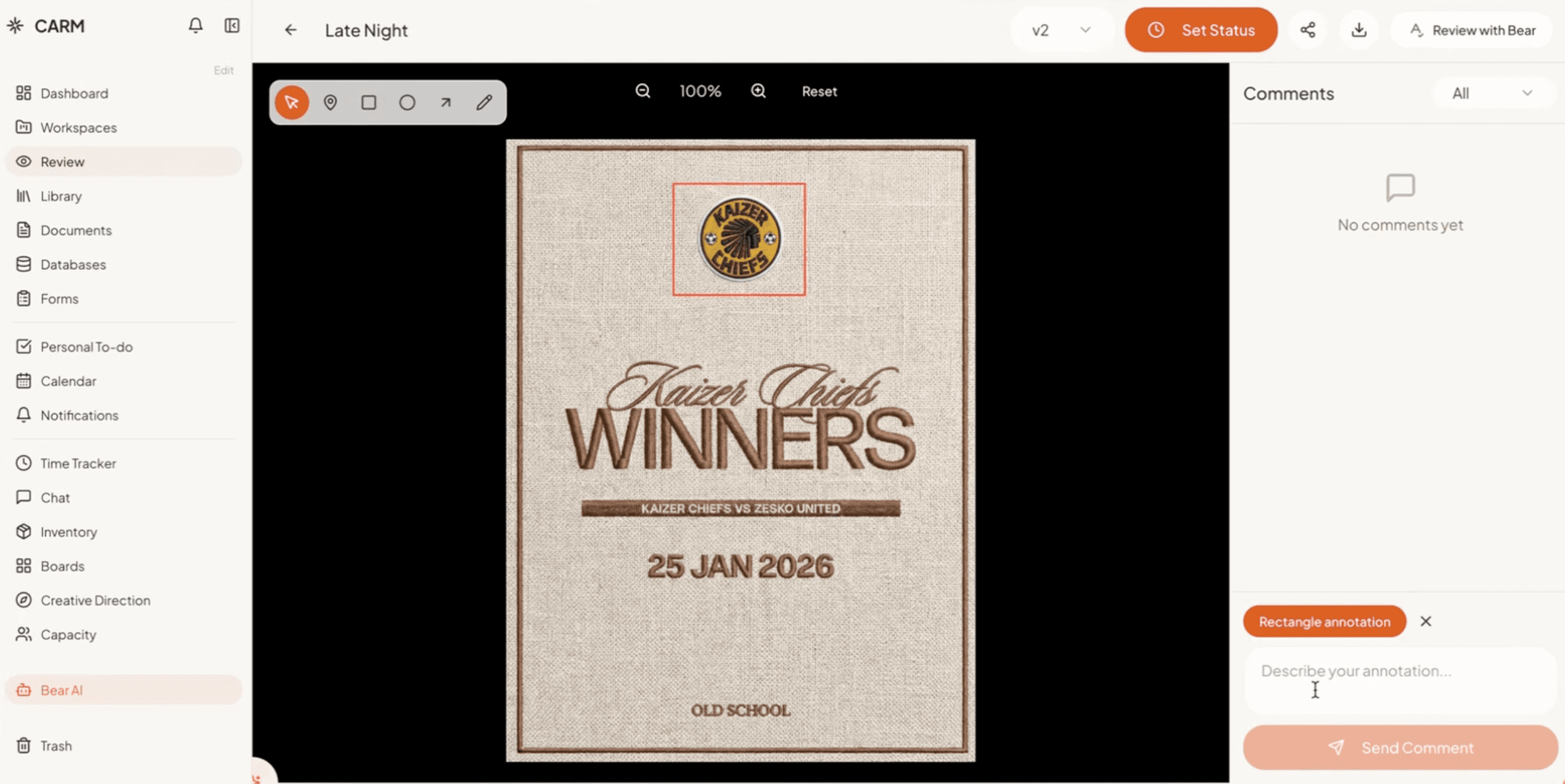
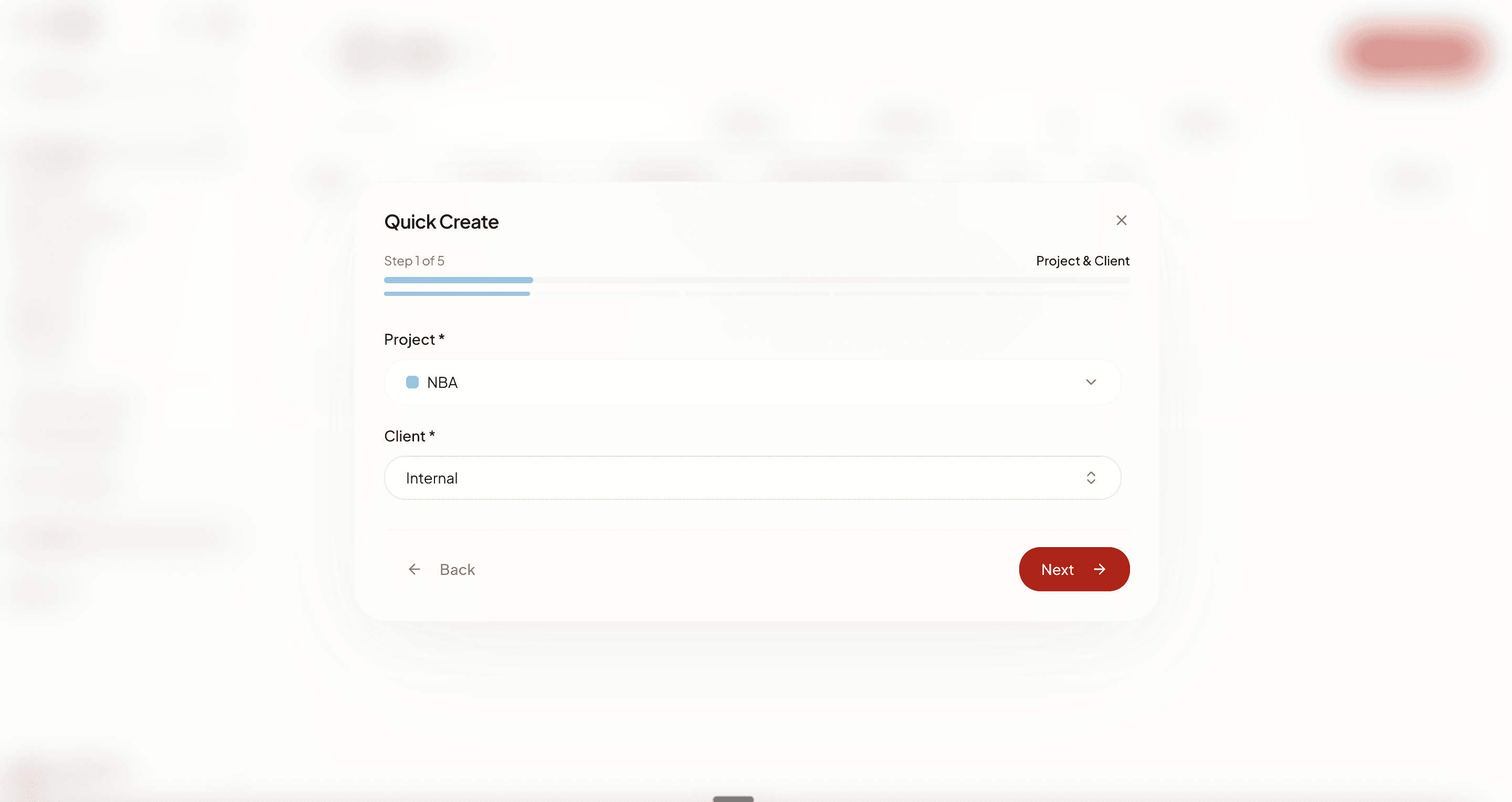
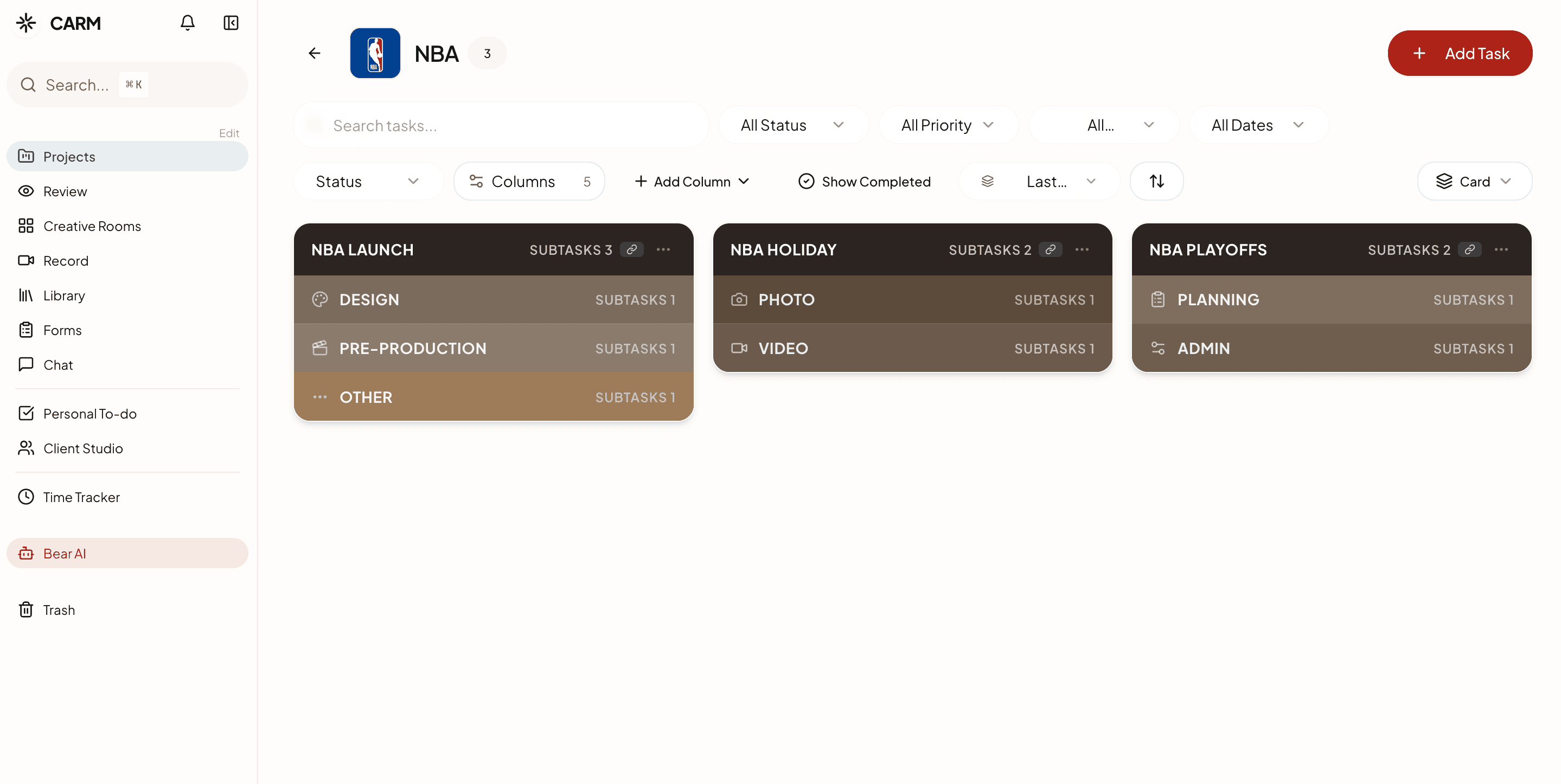
Client Studio. The hardest part of agency operations, simplified.
Client communication is one of the hardest parts of creative operations. Account managers, creative directors, and creative operations managers all feel it. Client Studio simplifies it. A CRM tool with a built-in communications platform where clients review their assets directly, designs, PDFs, photo, video, make favourite selections, leave comments, annotate, and sign off. You can see what has been viewed and by whom. No external email threads. No lost feedback. Clients are inside the operation, not outside it.
Sightline
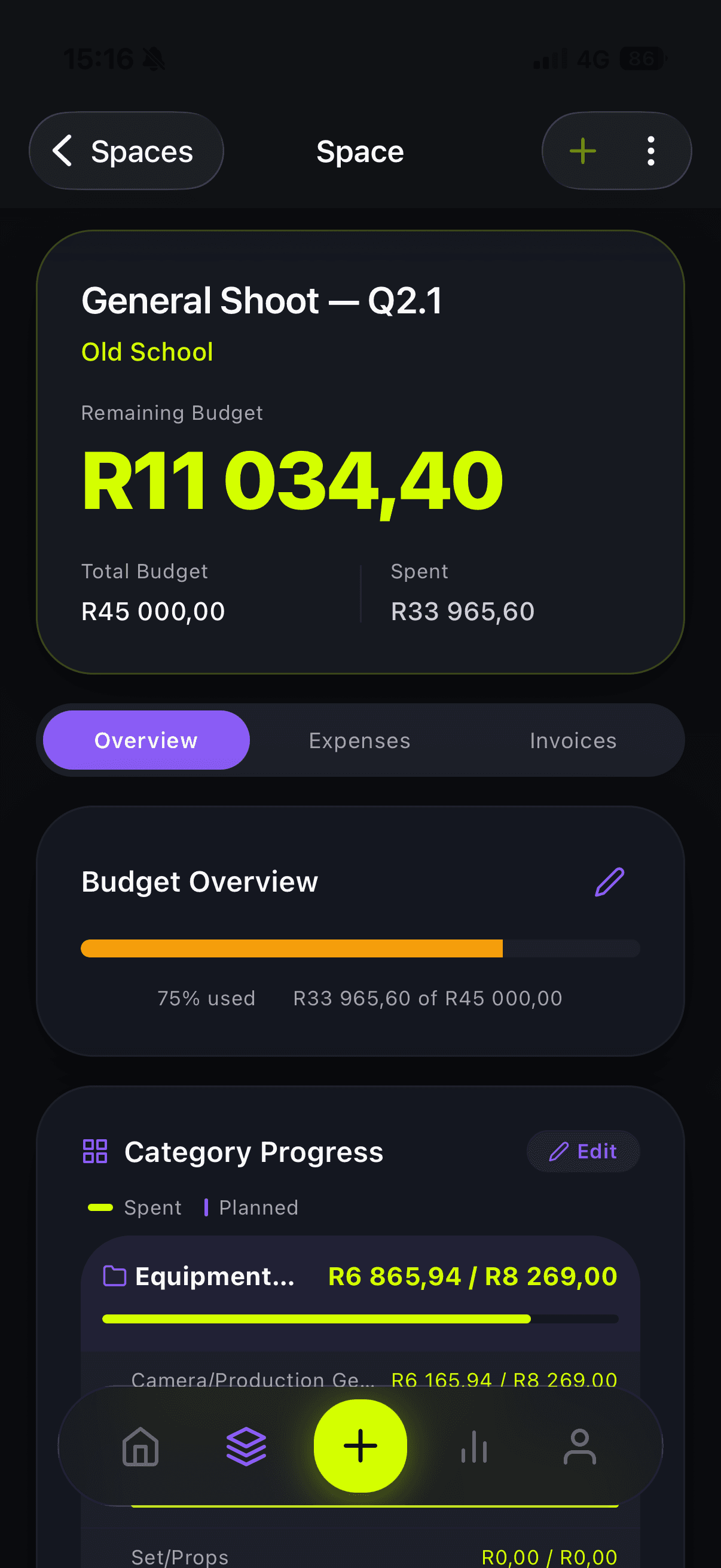
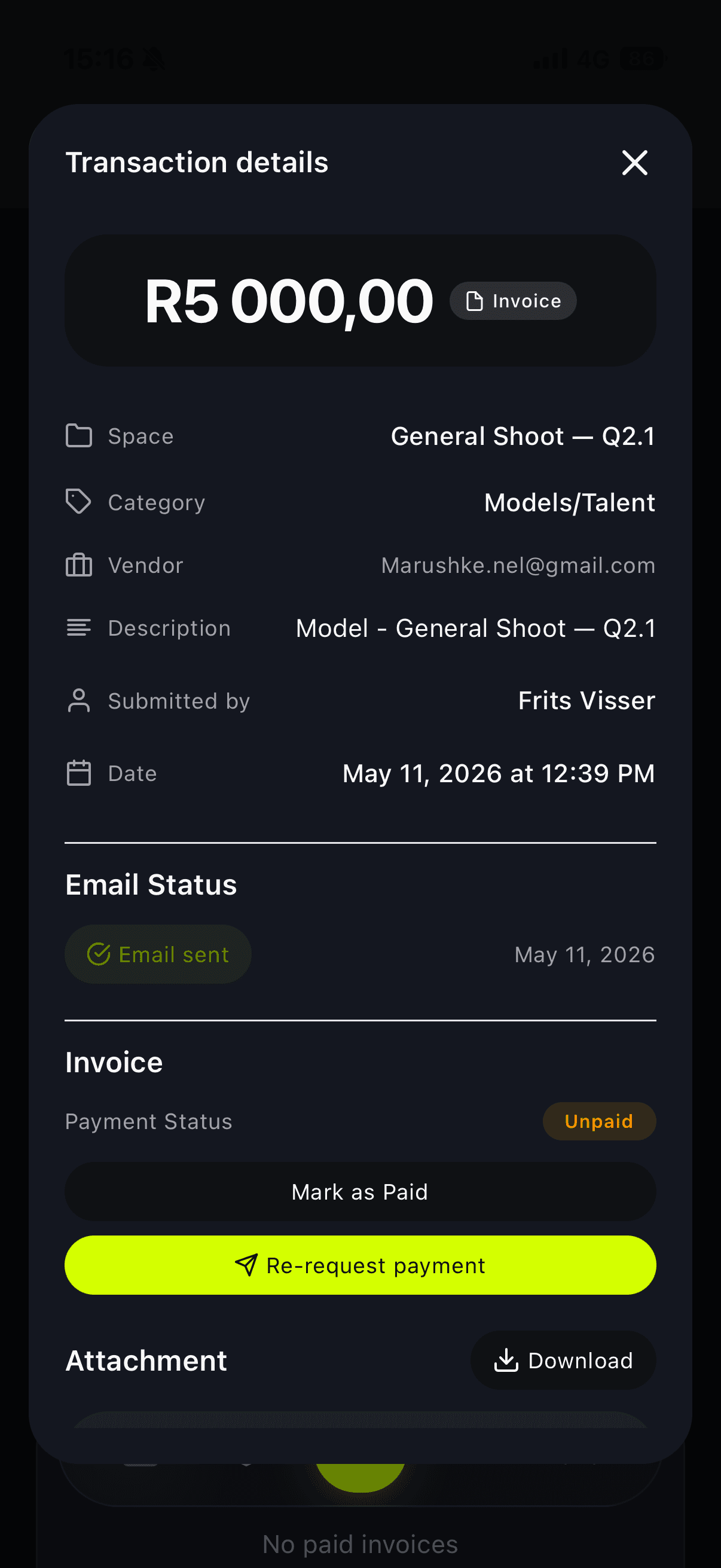
A creative budgeting tool that connects directly with finance team workflows. The creative team operates inside it for every campaign, every shoot, every freelance brief. Budgets are no longer a finance department artefact passed to creative after the fact. They live inside the brief, the timeline, and the production document, owned by the people doing the work.
Per-campaign spaces, real-time spend tracking, invoice management, vendor coordination, exportable PDF and Excel reports for the finance team. The creative team has clarity on every Rand spent, every invoice still outstanding, and every category they are tracking against. Finance has a clean handoff. Nobody is chasing receipts.
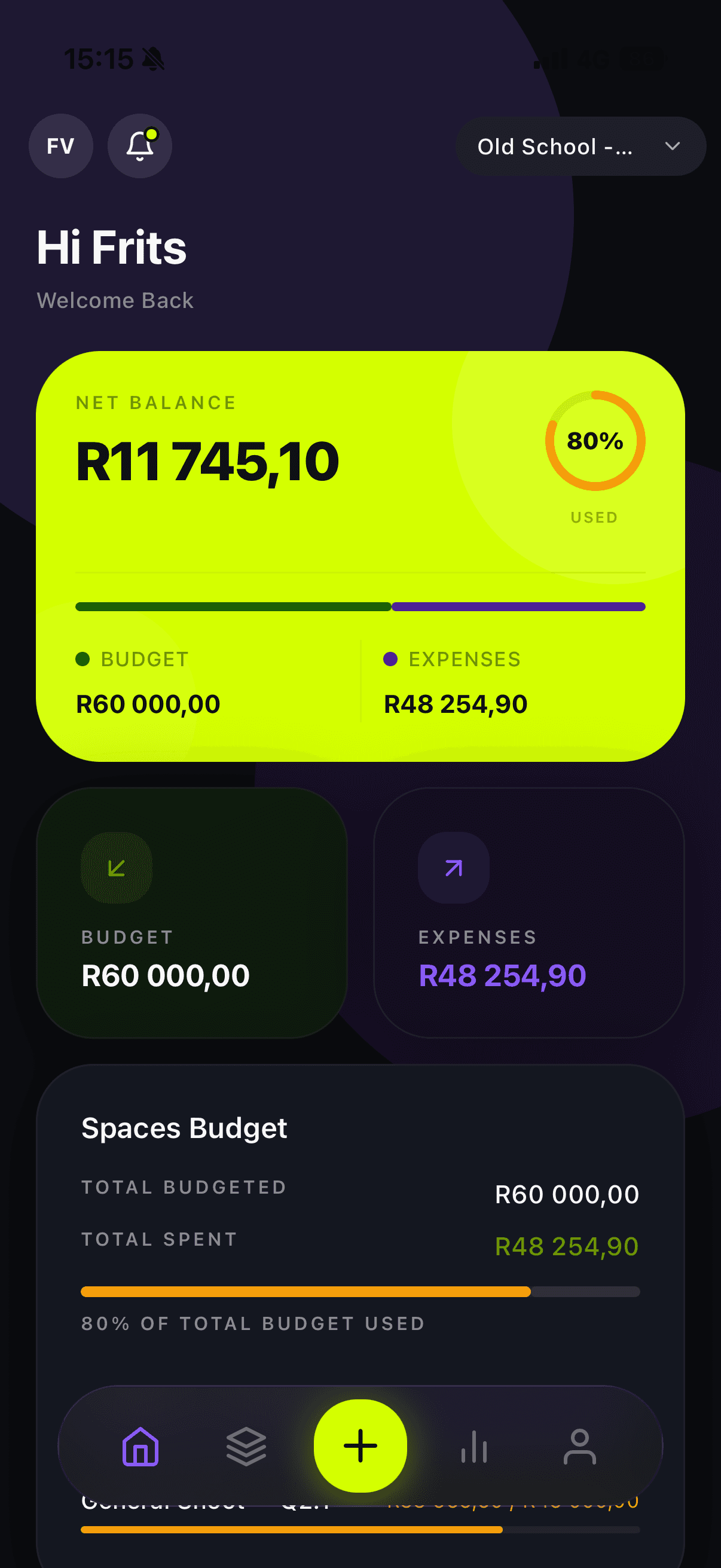
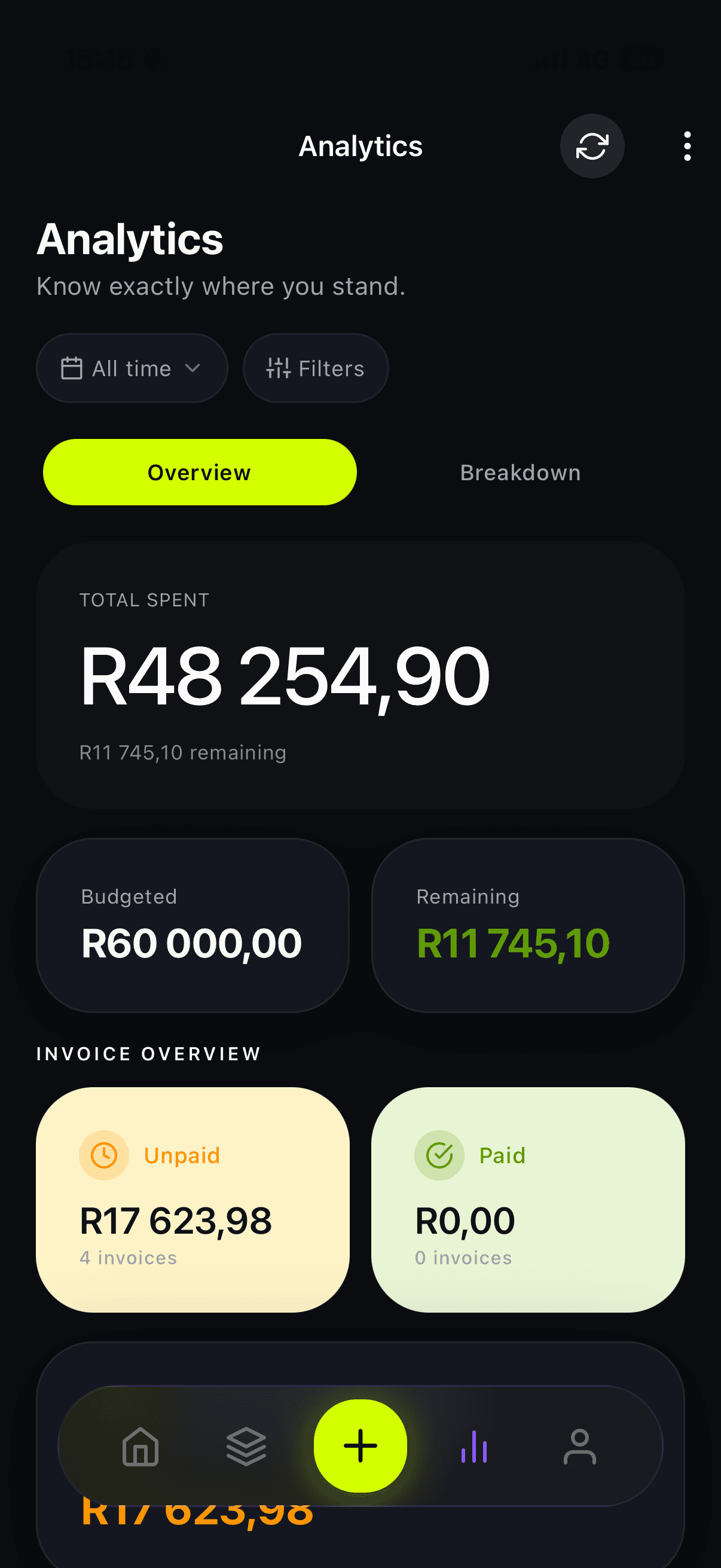
Production App
A custom production management tool built for film and photography teams. The production app holds the full shoot infrastructure inside a single live document, schedule, shot list, crew, storyboards integrated with AI for visual reference, gear breakdown by scene, talent bookings, and risk plans. Built because the off-the-shelf options were designed for film studios, not for creative-and-content houses that ship multiple campaigns a week across multiple brands.
End-to-end shoot planning. Schedule, shot list, crew list, storyboard reference, gear breakdown by scene. All connected, all editable, all live.
Built-in inventory app. Gear scanned in and out. Status, booking dates, owner, location. No more 'who has the camera bag.'
Database of talent and models. Integrated agency portal for direct comms with agencies and freelance talent. Bookings, rates, history, all inside the platform.
Operations is a human discipline. That is why I love it.
Most operations roles get written like supply chain management. Track the asset, hit the deadline, log the hours. The work matters because it gets done on time. I do not believe that. I believe operations is one of the most human disciplines inside a creative team, because the operation is the layer that decides whether the people on the team can do their best work or whether they spend their days fighting the system.
Every system I have built has had the same governing principle underneath it. The work has to ship on time and on standard. The people doing the work have to be served by the system, not consumed by it. Servant leadership is not a marketing line for me. It is the architecture of how I build briefs, how I structure capacity conversations, how I run shoot days, how I write freelance terms, how I close out a campaign and credit the team.
When operations is built well, the team has more energy at the end of the project than the beginning. When it is built badly, the work might still ship, but the people get smaller. That is the difference. I have spent ten years building toward the first one.
Operations is the architecture of care. The deadline is the floor, not the ceiling.
F.P.
The honest signal.
I am open to Creative Director roles, Creative Operations Manager roles, and hybrid leadership roles where both halves of this discipline are needed. The strongest creative organisations I have worked in have had operations leadership that thinks like a creative director, and creative direction that thinks like an operator. That combination is rare and I want to keep building inside it.
If you are hiring for either role, or for a hybrid that does not exist on most job boards yet, I would welcome a conversation.